A little background
Canned tomatoes make this soup consistent across seasons. Cooking the tomato paste briefly in oil gives the base a deeper savoury flavour, while the simmer softens the acidity and onion. The cream is stirred in after blending so it enriches the soup without needing a long boil. Choose plain tomatoes without a heavily seasoned sauce.
THE RECIPE
Ingredients for Tomato Soup
Yield: 4 servings. Measure the ingredients before starting, and keep optional additions separate until needed.
- 2 tablespoons olive oil
- 1 onion, diced
- 2 garlic cloves, minced
- 1 tablespoon tomato paste
- 2 cans / 800 g chopped tomatoes
- 2 cups low-sodium vegetable broth
- 1/3 cup cream or unsweetened oat cream
- 1/2 teaspoon dried basil
- 1/2 teaspoon fine salt
- 1/4 teaspoon black pepper
Step-by-step instructions
- Heat the oil in a saucepan and soften the onion for 8 minutes.
- Add garlic and tomato paste, stirring for 1 minute.
- Add tomatoes, broth, basil, salt, and pepper. Simmer gently for 20 minutes.
- Blend until smooth using a safe hot-liquid method.
- Stir in the cream, warm gently, and taste before serving. Thin with a little broth if necessary.
Cooking tips and troubleshooting
Tomatoes differ in sweetness and acidity. Taste after the simmer before deciding the soup needs adjustment. A little more cream can mellow a sharp batch; large amounts of sugar quickly turn a savoury soup cloying.
Build a base before adding liquid
Softening the first vegetables in a little oil creates a different flavour from simply boiling every ingredient together. Use moderate heat and give them time to lose their raw edge. The aim may be softness rather than deep browning, depending on the recipe. Stir garlic and ground spices briefly before adding the liquid so their flavour spreads through the oil. Garlic burns quickly, so do not leave the pot unattended during this short stage. A heavy-based pot reduces the risk of a scorched patch beneath a thick soup.
Cut according to cooking time
Dense vegetables and dry pulses need longer than tender greens. The order in the instructions protects that difference. Cut hard vegetables into pieces that can soften within the suggested simmer, and add delicate ingredients near the end. A blended soup is more forgiving about shape, but even pieces still make cooking more predictable. In a chunky soup, consider how the ingredients fit onto a spoon together. Large cubes may look attractive in the pot yet make the finished bowl awkward to eat.
Keep the simmer gentle
A rolling boil is not usually necessary once the ingredients are in the pot. Gentle bubbling cooks steadily while reducing the risk of splashes and uneven sticking. Partly cover the pot if too much liquid is disappearing, or uncover it if a stew needs to thicken. Stir across the base as well as around the edges. Beans, lentils, and vegetable purées can settle and catch even when the surface appears calm. If you need to loosen the pot, add a small amount of water or broth and bring it back to a gentle simmer.
Make texture a deliberate choice
For a smooth soup, check that the vegetables are fully tender before blending. A blender cannot always hide an undercooked dense piece. For a chunky soup or stew, stop cooking while the ingredients still have a distinct shape. If you want more body without cream, blending a small portion and returning it to the pot can help, provided the recipe suits that treatment. Add liquid gradually after blending because texture can change quickly. A soup that coats a spoon should still pour comfortably unless it is intentionally a thick stew.
Handle hot blending carefully
An immersion blender can keep the soup in its pot, but the blade head should stay submerged to avoid spraying hot liquid. Switch it off before lifting it out. If using a jug blender, consult its instructions for hot food, work in small batches, and use the venting method recommended by the manufacturer. Never seal steaming soup inside a blender not designed for hot liquids. Let the soup cool slightly when appropriate. These precautions matter more than obtaining a perfectly smooth texture a minute faster.
Season at the end as well
Broth, canned vegetables, and beans can each contribute salt, so the final taste is the best guide. A little lemon or lime added near serving can brighten a soup that tastes heavy without making it sharply acidic. Stir, taste, and wait a moment before adding more. Cool leftovers promptly in shallow containers rather than leaving a deep warm pot on the counter for hours. Reheated soups often need a little extra water because starches and pulses continue absorbing liquid in the refrigerator. Heat thoroughly, then taste again before serving.
Variations to try
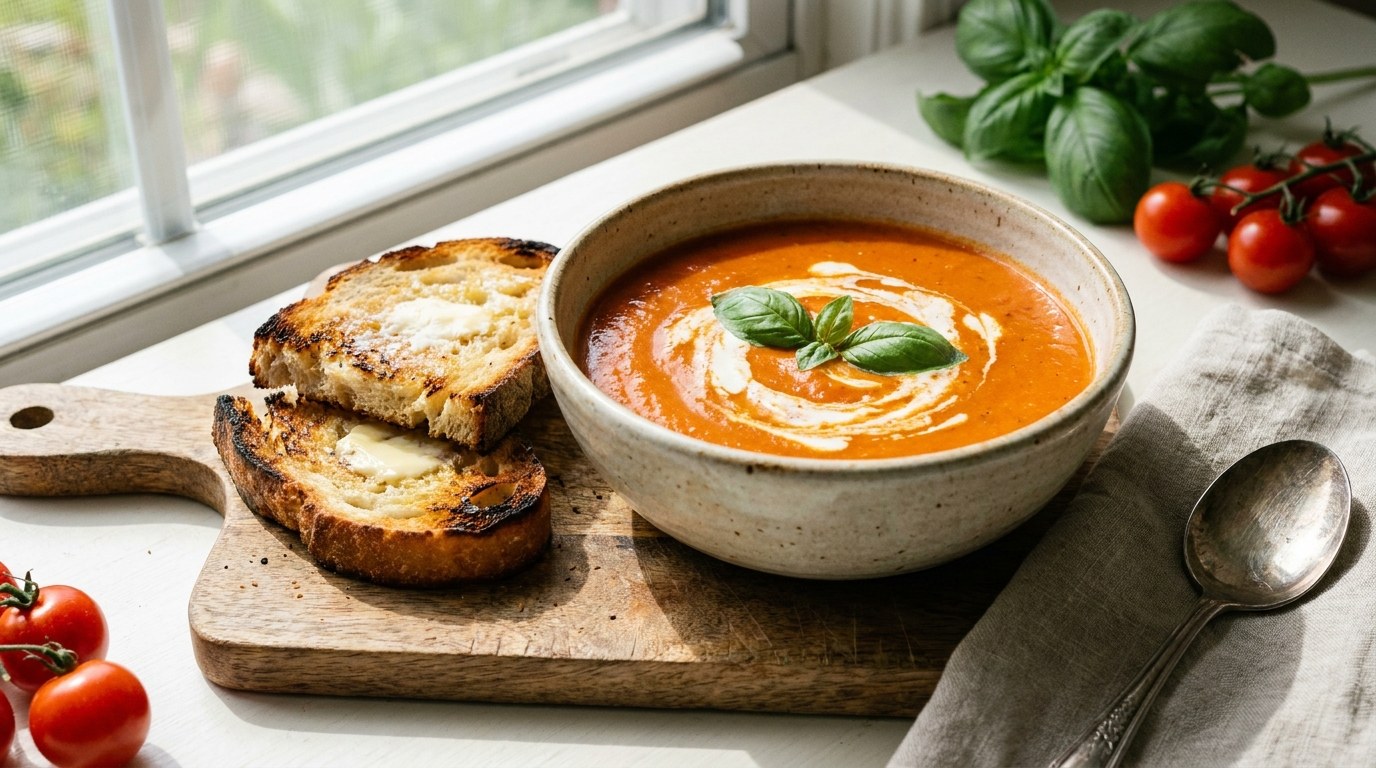
Use oat cream for a dairy-free bowl or omit the cream for a lighter tomato broth. Add a few fresh basil leaves after blending if available. A pinch of smoked paprika offers a different direction without needing additional vegetables.
Serving suggestions
Serve with toasted bread and a simple cheese sandwich or a bean-filled toast. Pepper and a small swirl of cream make a straightforward finish.
Storage and leftovers
Refrigerate for up to 3 days. Freeze before adding cream for the smoothest reheated texture, then stir in the cream after thawing and heating.
Planning, ingredients, and portions
Read the ingredient labels
Ingredient names describe a role in the recipe, but packaged products can contain additional seasonings, sweeteners, or allergens. Choose plain versions where the list specifies plain yogurt, purée, tomatoes, or milk. Check broth, sauces, chocolate, bread, and spice blends individually rather than assuming the dish name tells you everything about its ingredients. If cooking for someone with an allergy, ask about their requirements and prevent cross-contact with utensils and surfaces. A vegetarian recipe can still contain milk, eggs, wheat, soy, sesame, or nuts. The suggested variations are flavour and cooking options, not a guarantee that every product on your shelf fits a particular diet.
Scale ingredients without scaling every minute
For a smaller batch, reduce the ingredient quantities proportionally and choose equipment that still allows the intended depth or space. For a larger batch, doubling ingredients does not always mean using one larger pan or doubling the cooking time. Crowding, depth, and evaporation change how the food cooks. Work in batches where the method depends on browning or handling individual portions. Keep the doneness checks in the instructions as your final guide. Divide leftovers into useful portions rather than reheating the entire batch repeatedly. If a recipe includes a small quantity of salt or a strong spice, start conservatively and taste before making the final adjustment.
Understand the estimated nutrition
The nutrition figures below are rough editorial estimates per stated serving of the base recipe. They are not laboratory results and should not be treated as precise dietary advice. Brands, portion sizes, optional garnishes, ingredient substitutions, and how much cooking fat remains in the dish can all change the result. The figures cover calories, protein, carbohydrate, and fat; they do not provide a complete micronutrient or sodium analysis. If you need accurate values for a medical or carefully controlled dietary plan, calculate the recipe using the specific products and quantities you actually use, then divide by the measured number of portions.
Plan the meal around the recipe
Consider what this recipe already contributes before choosing a side. A vegetable side may need beans, grains, eggs, or another suitable component to make a satisfying meal, while a substantial pasta, bean bowl, or filled wrap may need only fresh vegetables alongside. Sweet bakes are portions of dessert or baking rather than a complete meal simply because they include fruit or vegetables. Appetite and individual needs vary, so the stated yield is a practical way to divide the batch, not a rule about how much every person must eat. The serving suggestions below are intended to help you build a meal with contrasting textures and flavours.
Nutrition information
Approximate nutrition per serving of the base recipe; optional toppings and substitutions are excluded. These figures are editorial estimates, not a verified analysis.
- Energy
- 190 kcal
- Protein
- 4 g
- Carbohydrate
- 20 g
- Fat
- 11 g
Frequently asked questions
How do I know tomato soup is ready?
The target is velvety tomato soup with a balanced tang and gentle richness. Use that description alongside the specific checks in the final cooking or assembly step. The suggested 40 minutes is a guide for active preparation and cooking, and it does not override the visible or texture cues. Ingredient sizes and equipment can change the timing. Check a representative portion rather than assuming the first piece you see represents the whole batch.
Can I prepare this recipe ahead?
Refrigerate for up to 3 days. Freeze before adding cream for the smoothest reheated texture, then stir in the cream after thawing and heating. Prepare any durable ingredients first and keep delicate finishing ingredients separate where practical. When planning ahead, allow time for the final cooking, reheating, or assembly rather than assuming the dish can sit at room temperature until the meal. Food should be stored in a clean covered container, and fresh toppings should be added close to serving.
What should I change if the texture is wrong?
Tomatoes differ in sweetness and acidity. Taste after the simmer before deciding the soup needs adjustment. A little more cream can mellow a sharp batch; large amounts of sugar quickly turn a savoury soup cloying. Review ingredient quantities and the stage at which the texture changed before adding several new ingredients. A small correction is easier to assess than a large one. If extra liquid is suitable, add it gradually; if more cooking is required, continue gently and check again. The technique notes above explain the main controls for this type of recipe.
Can I change the ingredients for my diet?
Use oat cream for a dairy-free bowl or omit the cream for a lighter tomato broth. Add a few fresh basil leaves after blending if available. A pinch of smoked paprika offers a different direction without needing additional vegetables. Read labels for the exact products you use, including toppings and sides. One substitution does not automatically remove all allergens. Keep the core quantities stable and choose one suggested change for a first attempt.
Bring it to the table
Tomato Soup works best when you focus on its main ingredients and the texture described here: velvety tomato soup with a balanced tang and gentle richness. Prepare the components in order, taste where appropriate, and choose a simple accompaniment rather than adding unnecessary complexity. Serve with toasted bread and a simple cheese sandwich or a bean-filled toast. Pepper and a small swirl of cream make a straightforward finish. Keep a note of the timing and seasoning that suited your equipment so your next batch is easier to plan.